CLUE.AI
Limited follow-ups. Endless logic.
A hybrid investigative mystery game combining physical cards, QR interactions and an AI-assisted terminal. Players have only three strategic follow-up questions per clue, making every decision matter.

The design challenge
How can a mystery game combine the tactile presence of physical cards with adaptive digital storytelling without reducing the need for human deduction?
The proposed solution
Two QR-enabled card decks connect to a digital terminal. A strict three-question constraint encourages players to discuss, prioritise evidence and make a final accusation together.
THREE QUESTIONS. NO ROOM FOR WASTED MOVES.
The central design decision is constraint. Rather than allowing unlimited questioning, the system makes players collaborate and choose carefully before using each inquiry.
SYSTEM BOOT
Scan a Scenario Card to open the case, crime scene and central mystery.
IDENTITY SYNC
Each player scans a Role Card. Investigators and the hidden killer receive their identities.
INTERROGATION
Players discuss the evidence and agree on their three strategic questions.
FATAL LOCKOUT
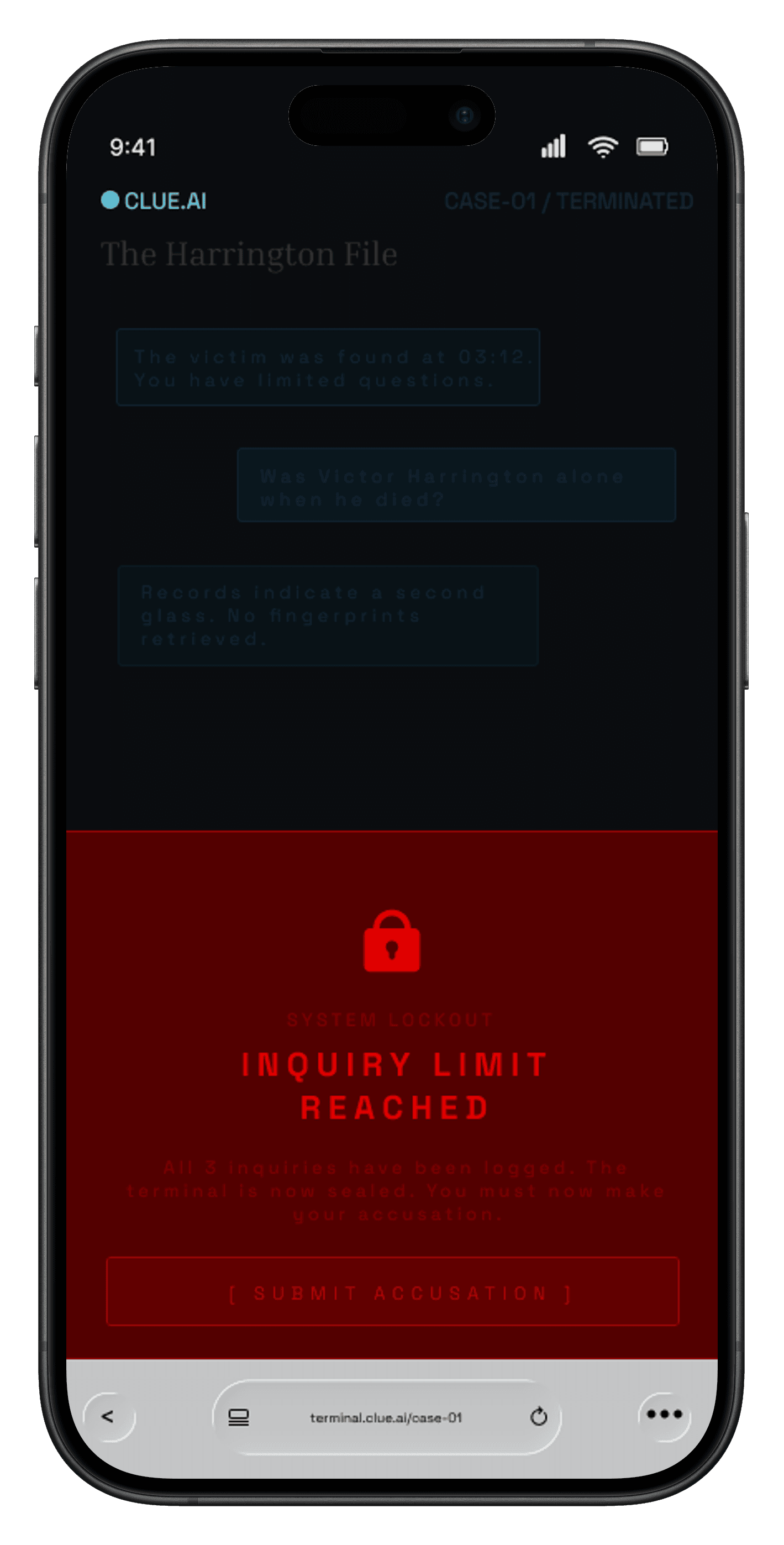
After the final question, the terminal locks. Players must vote using the evidence collected.
INTERACTIVE ILLUSTRATION OF THE THREE-QUESTION RULE. NOT A LIVE AI GAME SESSION.
A VISUAL LANGUAGE BUILT FOR INVESTIGATION.
The Cybernetic Noir direction uses biometric imagery, clinical typography, controlled colour and high-contrast system cues to create an authoritative investigative identity.

01 / FORENSIC VISUAL DIRECTION

02 / LOGO EXPLORATION

BIOMETRIC DATA × INVESTIGATIVE IDENTITY
ATTRACTIVE BLACK
#231F20DARK CHARCOAL
#313131SYSTEM CYAN
#69CCE2WHITE
#FFFFFFDEEP RED
#AF2224TWO WORLDS. ONE INVESTIGATION.
Physical Scenario and Role Cards create the tangible game. The mobile terminal introduces evidence, secret identities, controlled questioning and the final lockout state.


Role Cards
QR-enabled cards introduce the players' identities, connecting physical play to the digital system.

Scenario Cards
Each scenario introduces a mystery and establishes the context for investigation.


01 / MOBILE EXPERIENCE
02 / INVESTIGATION TERMINAL
The red warning state signals the end of the questioning phase. From this point onward, players must rely on the evidence already gathered.
THE TECHNOLOGY SUPPORTS THE GAME. IT DOESN'T REPLACE IT.
The design takeaway
CLUE.AI demonstrates how constraints can shape behaviour. Limiting questions creates a reason for players to discuss evidence, plan together and make decisions deliberately.
What comes next
I would explore voice-controlled interrogation, AR evidence linked to physical cards, and dynamically generated cases. These are future directions rather than completed features.


